
GEO vs AEO
GEO (generative engine optimization) and AEO (answer engine optimization) are overlapping industry labels for improving visibility in AI answers. GEO often emphasizes generated responses; AEO emphasizes answers, but vendors use both for monitoring, citations, and content improvement. Use this page to understand the vocabulary, then evaluate the actual workflow.
These are common emphases, not separate technical requirements or mutually exclusive products. Both labels can cover the complete AI visibility workflow.
How are GEO and AEO used?
| Decision point | GEO | AEO |
|---|---|---|
| Goal | Improve brand presence, citations, and recommendation context inside generated AI responses. | Improve mentions, citations, and recommendations by making useful answers easy to discover and verify. |
| User intent | Broad discovery, comparison, recommendation, and multi-step prompts across providers. | Questions, comparisons, and recommendations where the user expects an answer. |
| Measurement | Provider split, prompt-cluster split, source-category mix, Appearance Rate, Share of Voice. | Mentions, citations, provider differences, and later changes; the same evidence can serve GEO. |
| Signals | Exact prompt-to-page fit, structured comparisons, freshness, source diversity, and off-site corroboration. | Direct answers, question headings, focused paragraphs, schema alignment, and standalone tables. |
| PromptScout workflow | Monitor provider-specific generated answers, source categories, competitors, and trend movement. | Audit answer-first pages, citations, prompt intent, and whether AI responses reuse the evidence. |
| When not to use the term | Do not use GEO for generic SEO work with no provider or generated-response measurement. | Do not assume AEO means only FAQs or snippets; inspect the documented capabilities. |
Is GEO the same as AEO?
The terms overlap heavily and have no universal boundary. Both can describe monitoring AI answers, reviewing sources, and improving content. A definition is useful only if it helps your team choose a concrete next action.
- GEO often emphasizes generated answers and their sources.
- AEO can include answer structure, monitoring, source analysis, and optimization.
- Use SEO fundamentals underneath both so important pages can be discovered and indexed.
What does PromptScout measure for either workflow?
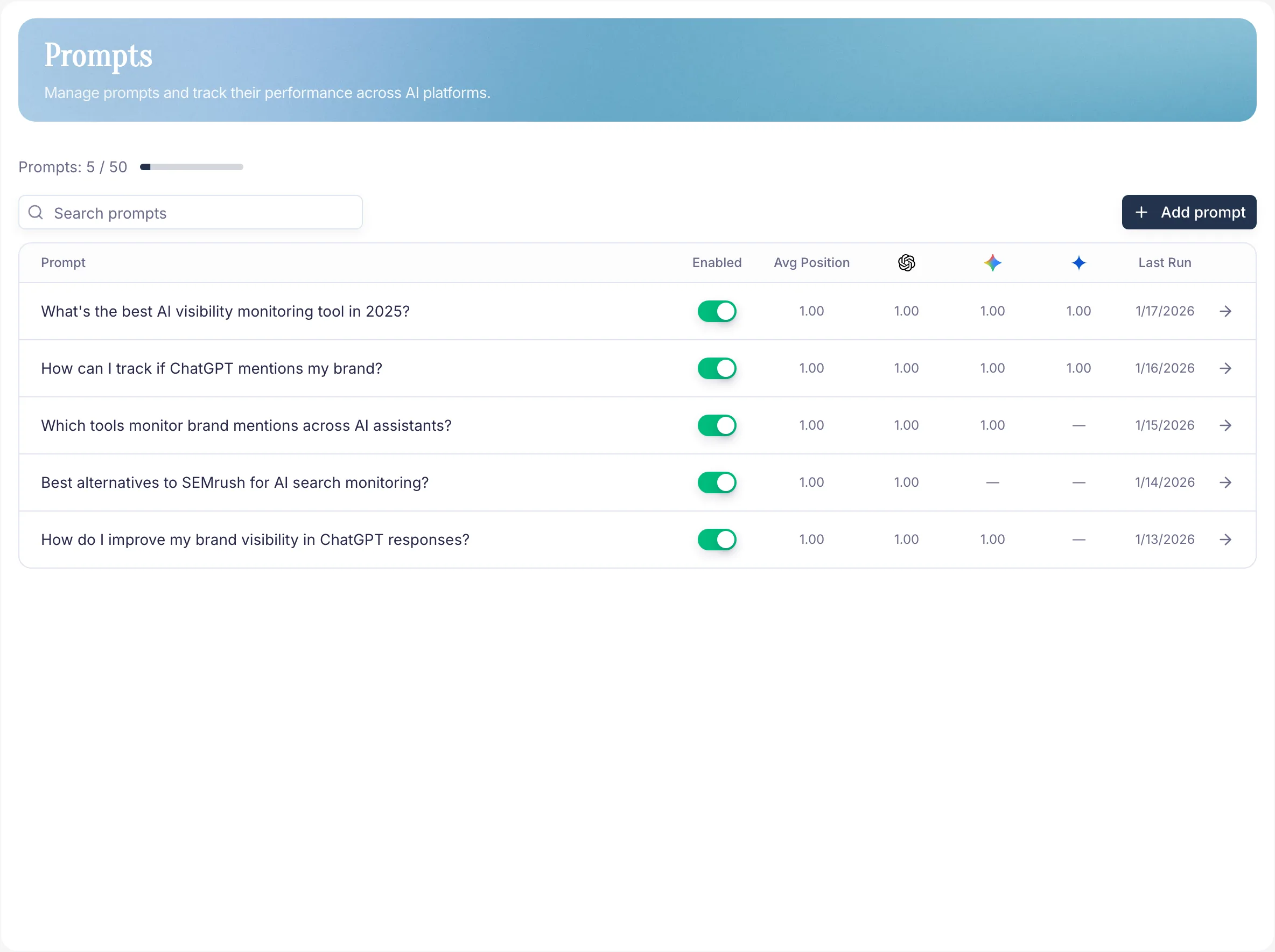
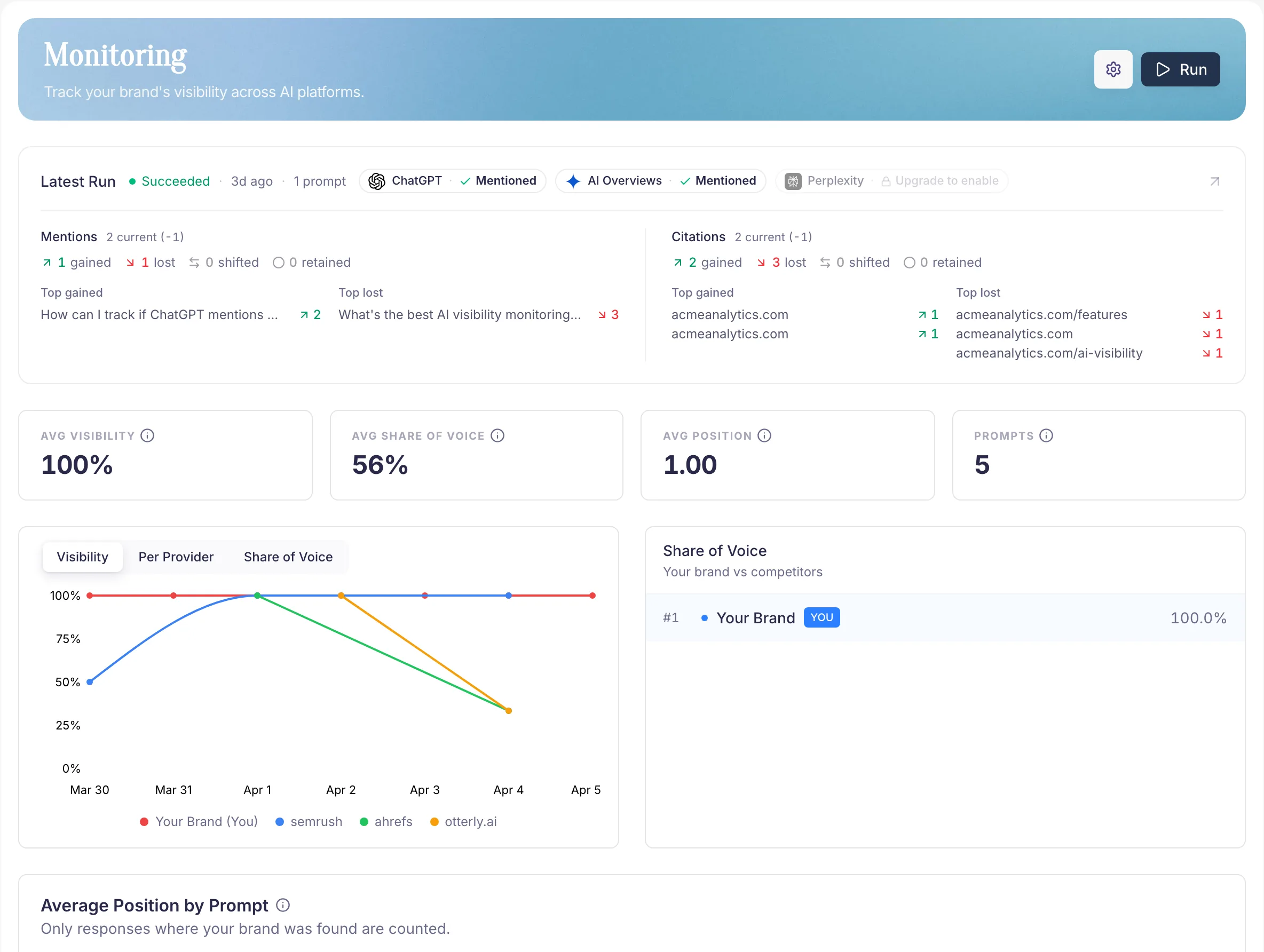
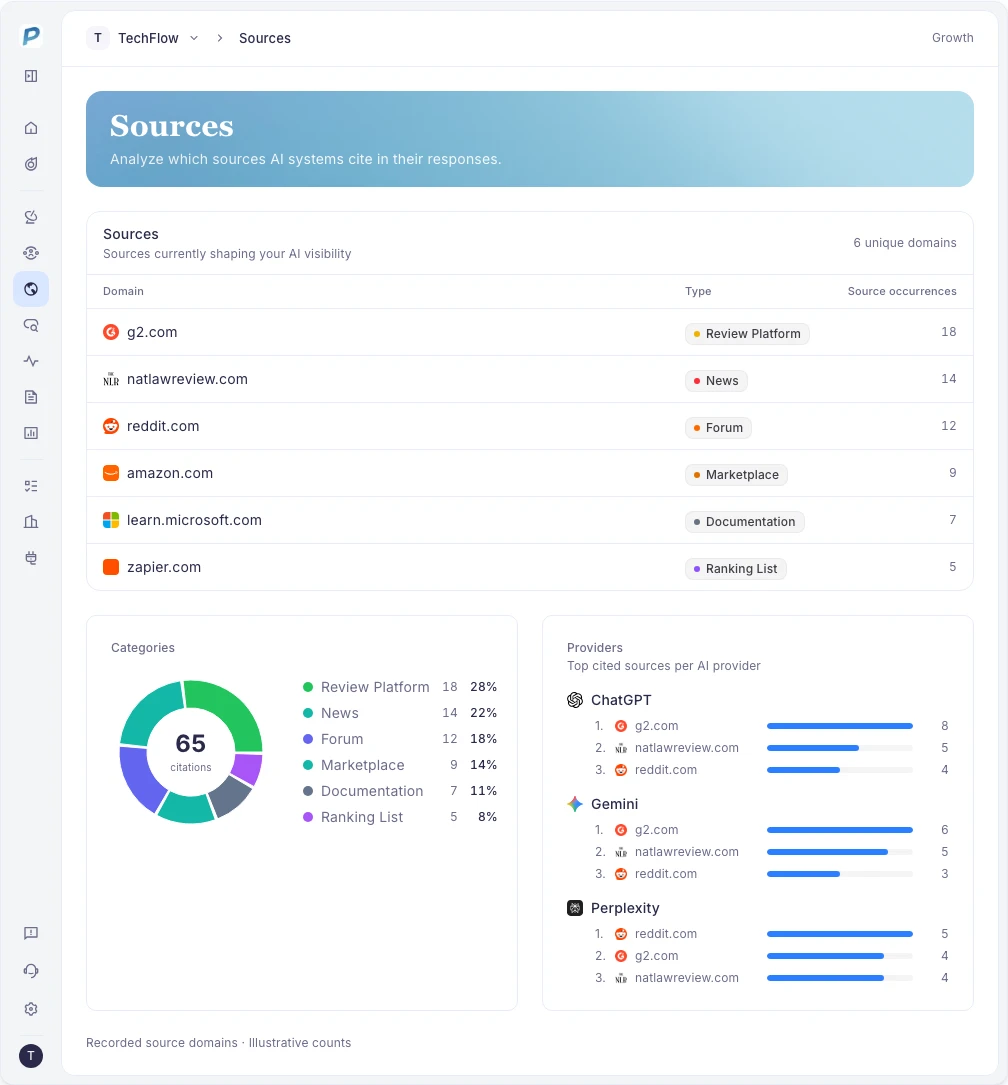
PromptScout monitors the same buyer prompts across supported providers, records the cited URLs and brands, then groups the evidence by provider, prompt cluster, and source category. Use those observations to choose an Opportunity on Growth or higher, then observe subsequent changes without claiming causation.
- Prompts define the demand surface instead of relying on generic category volume.
- Provider split shows whether ChatGPT, Gemini, Google AI Overviews, Perplexity, and Bing Copilot behave differently.
- Source-category mix separates owned pages from reviews, communities, editorials, documentation, and search surfaces.
How does the buyer question shape the next action?
Prompt intent decides the next action. A definition query benefits from a clear explanation. A software recommendation prompt calls for provider and source evidence. A comparison query often needs an indexable page with an extractable matrix and recurring prompt checks after publication.
- "What is GEO?" needs a clear explanation: define the term directly, then show measurement examples.
- "best tools for tracking ChatGPT citations" needs evidence: monitor providers, sources, and competitors.
- "GEO vs AEO" needs both: publish a standalone table and track whether answer engines cite or summarize it.
- "how do Google AI Overviews report traffic?" needs both: cite Google guidance and measure AI visibility separately.
How should Search Console fit into GEO and AEO reporting?
Search Console reports Google Search performance, including AI features within the Web search type, but it is not a provider-split GEO dashboard. Use it to diagnose crawl, index, snippet, and traffic movement. Use PromptScout to measure prompt/provider visibility, citation presence, source category, and AI-answer movement.
- Do not claim Google exposes every AI Overview query as a separate report.
- Track provider and prompt clusters separately because citation patterns vary by model, industry, and intent.
- Report both SEO and AI visibility metrics so teams can see which channel changed.

Frequently Asked Questions
Is GEO broader than AEO?
Not necessarily. Vendors use both labels for generated-response visibility, provider behavior, source categories, and recommendation patterns. AEO is focused on answer extraction and citation readiness.
Can one page support both GEO and AEO?
Yes. A page with a direct answer, a standalone comparison table, current evidence, and clear internal links can support AEO extraction and GEO recommendation prompts.
How do I measure GEO?
Use fixed prompts across providers, then report Appearance Rate, Share of Voice, Citation Presence, Citation Rank, provider split, prompt-cluster split, and source-category mix.
Related Guides and Next Steps
Use these resources to compare options, improve AI visibility, and move toward implementation.
AEO and SEO Comparison
Understand how AI SEO differs from traditional SEO workflows.
Read guide
AI Monitoring Tools Comparison
Compare AI monitoring tools by provider coverage, prompt workflows, competitor tracking, and reporting fit.
Explore feature
The AEO and GEO Guide
A four-part guide to how AI answers choose sources, what you can influence, and how to measure it, with first-party monitoring data.
Read guide
PromptScout for Agencies
Package multi-brand AI visibility monitoring for client reporting across supported providers.
See pricing or create account
Run a Free AI Visibility Check
Preview three buyer questions, then sign up to run three free AI answers. Ongoing monitoring requires a paid plan.
See pricing or create account
AI Visibility Pricing Plans
Compare plans and start monitoring AI visibility with the right tier.
See pricing or create account
Related Features
What is GEO?
Learn what Generative Engine Optimization (GEO) is, how it overlaps with AEO and SEO, and how to monitor your brand in AI search results.
Explore What is GEO?GEO Tools
Find AI visibility gaps and turn source evidence into focused content work with GEO and AEO tools. Start free; choose a paid plan for ongoing monitoring.
Explore GEO ToolsAI Citation & Source Tracking
Inspect source URLs, displayed citations, recurring domains, and page types in monitored AI answers. Review brand context with PromptScout, starting on Starter.
Explore AI Citation & Source Tracking